Planning your first East African safari can feel overwhelming. Should you choose Kenya or Tanzania? When is the best time to travel? Is the Great Migration worth planning around? This guide will help you choose the right destination, itinerary, and safari experience for your trip.
Published
22 Jul 2026
Written by
Nicholas
Read time
17 min read
Filed under
Adventure Activities, Beach & Coastal Escapes, Best Time to Visit
Your First Safari in East Africa: What We Wish Every Traveler Knew Before They Came
There comes a point when almost every traveler dreaming of Africa starts asking the same questions. Should we go to Kenya or Tanzania? Is the Great Migration worth planning around? Should we include gorilla trekking? Is a luxury safari really worth it? How many parks can we fit into ten days? On paper, they all seem like the right questions.
After years of helping people plan safaris across Kenya, Tanzania, Uganda, Rwanda and Zanzibar, I’ve found that they’re rarely the most important ones. The biggest surprise for first-time visitors isn’t the size of the elephant herds or how close they get to a lion. It’s how different a safari feels from every other holiday they’ve taken.

Africa has its own rhythm: Days begin before sunrise with coffee around the campfire as the bush slowly comes to life. Afternoons are unhurried. Dinner is often shared beneath a sky so full of stars that it hardly seems real. Some of the most memorable moments aren’t dramatic wildlife sightings at all—they’re the quiet ones. Watching elephants wander past your veranda, listening to lions calling in the distance after dark, sharing stories with your guide long after the game drive has ended, and many more. Those are the moments people talk about years later. That’s also why planning a safari isn’t simply about choosing destinations from a map. It’s about understanding the kind of experience you want to have.
Every traveler is different: Some dream of seeing the Great Migration. Others want complete privacy in a small conservancy where they might spend an hour watching a leopard without another vehicle in sight. Some are celebrating a honeymoon, while others are introducing their children to Africa for the first time. There isn’t one perfect safari; there is only the safari that’s perfect for you. That’s why every journey we design begins the same way—not with an itinerary, but with a conversation.

Start With the Experience, Not the Destination
One of the first things we ask our guests isn’t, “Where would you like to go?” It’s something much simpler: “When you look back on this trip in ten years’ time, what do you hope you’ll remember?”
The answer is never just a place: Some people want to watch the Great Migration cross the Mara River. Others dream of sitting quietly as a family of elephants passes beneath Mount Kilimanjaro. For some, it’s tracking mountain gorillas through the forests of Uganda or Rwanda. For honeymooners, it might be a private dinner under the stars followed by a few lazy days on Zanzibar’s beaches.

Those answers tell us far more than simply saying, “We want to visit the Serengeti.” It’s easy to build an itinerary around famous names. It’s much harder—and far more rewarding—to build one around the experiences that matter most to you.
We’ve learned this over the years: Two guests can stay in exactly the same lodge and come home talking about completely different things. One remembers the cheetah hunt they witnessed on the open plains. The other can’t stop talking about their guide, who somehow spotted a leopard sleeping in a sausage tree that everyone else had driven straight past. That’s why we never believe in selling a standard itinerary.
East Africa offers extraordinary variety. Wildlife, landscapes, culture, conservation, beaches, adventure—it’s all here. The art lies in combining those pieces in a way that feels effortless and personal. Yes, the destination is important, but the experience is what you’ll remember.
Road Safari or Fly-In Safari?
People often ask us which is better. The honest answer? –Neither– they simply offer different ways of experiencing East Africa.
There’s something deeply satisfying about travelling by road, you notice the country changing around you. Small villages appear between rolling hills. Children wave as you pass. Roadside fruit markets burst with color. You begin to appreciate that the journey between the parks is part of the experience, not just the transfer. Some of my favorite memories have happened between destinations rather than inside them. Stopping unexpectedly to watch a herd of giraffes feeding beside the road, buying freshly roasted corn from a roadside stall, or pulling over because Mount Kilimanjaro suddenly emerged from the clouds. Those moments aren’t scheduled, but they often become part of the story.
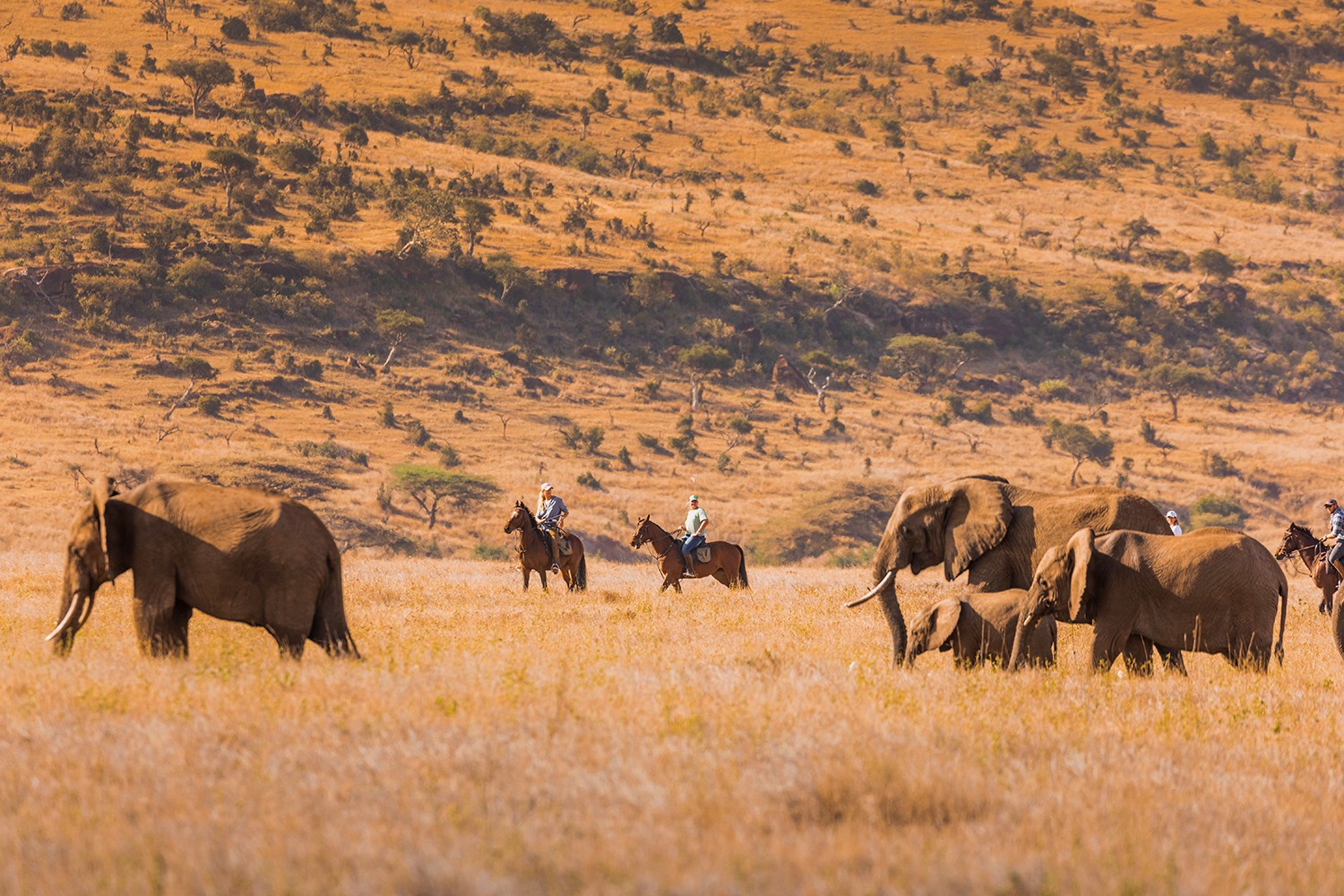
Flying, on the other hand, changes the pace completely. Within an hour, you can leave Nairobi behind and land on a remote airstrip where a safari guide is already waiting with a vehicle. Sometimes the game drive begins before you’ve even reached your lodge/camp. For guests celebrating a honeymoon or travelling for a special occasion, fly-in safaris allow more time enjoying the wilderness and less time travelling between destinations. There’s also something unforgettable about looking out of a small aircraft as the landscapes unfold below you—the winding Mara River, scattered acacia trees, herds of elephants appearing like tiny moving dots across the plains.
We often recommend a combination of both. Drive where the journey itself is part of the adventure. Fly where it gives you more time to experience what you’ve travelled so far to see.
National Parks or Private Conservancies?
This is probably one of the biggest surprises for first-time visitors. Many people assume every safari takes place inside a national park. In reality, some of the most memorable wildlife experiences happen just beyond the park boundaries, in privately managed conservancies.
Don’t misunderstand me—the Masai Mara, Serengeti, Amboseli, Tarangire and Ngorongoro deserve every bit of their reputation. They are among the finest wildlife destinations on the planet, and there’s a reason people travel thousands of miles to experience them. But after years of exploring East Africa, I’ve learned that some of the most rewarding moments happen where there are fewer vehicles and a little more space.
I still remember spending almost an hour watching a mother cheetah teach her cubs to hunt in a private conservancy north of the Mara. There wasn’t another vehicle in sight. Nobody was rushing to the next sighting. We simply sat quietly, watching nature unfold exactly as it should. That kind of experience stays with you.

Private conservancies also allow activities that many national parks don’t. Walking safaris are a perfect example. Once you’re on foot with an experienced guide, your perspective changes completely. You stop looking only for lions and elephants and begin noticing the smaller details—the fresh tracks in the sand, the scent of wild sage after rain, the alarm calls of birds, and the intricate relationships that keep the ecosystem alive. Night game drives are another privilege. Long after the day visitors have left, the bush comes alive again. Leopards become active, porcupines shuffle across the tracks, bush babies leap between branches, and if you’re lucky, you might even encounter an aardwolf or civet.
Whenever we’re planning an itinerary, we rarely think in terms of choosing one over the other. The magic usually lies in combining both. Spend time in the famous parks that have inspired generations of travelers, then retreat to a conservancy where the pace slows and the experience becomes more personal.
Choosing the Right Accommodation

People often ask us which lodge is “the best?” It’s an understandable question, but after visiting hundreds of properties across East Africa, I’ve come to realize that the best lodge is simply the one that’s right for you. I’ve stayed in beautifully designed lodges with every luxury imaginable, yet found myself driving an hour each morning before seeing any wildlife. I’ve also stayed in simple tented camps where elephants wandered through camp during breakfast and lions could be heard roaring throughout the night. Guess which one I remember most?
Location changes everything: Being close to where the wildlife is active means you’re often the first vehicle at a sighting while others are still driving from farther away. It also means you spend less time travelling and more time enjoying the safari itself.
Then there are the people: A great lodge isn’t defined by polished floors or designer furniture. It’s the guide who notices a leopard hidden high in an acacia tree long before anyone else. It’s the camp manager who remembers your favorite coffee after the first morning. It’s the chef who prepares dinner around the campfire because they know you’re celebrating an anniversary.
Those small touches aren’t listed on a website, but they’re often what guests remember most. That’s one reason we spend so much time visiting the places we recommend. Photographs tell you what a lodge looks like, being there tells you how it feels.
Why Timing Changes Everything
One of the questions we hear most often is: “When is the best time to visit East Africa?”
People are often surprised by my answer – There isn’t one. Every season offers something different, and after travelling through these landscapes year after year, I’ve stopped thinking in terms of “good” months and “bad” months. Instead, I think about experiences.

If your dream is witnessing the Great Migration crossing the Mara River, then timing matters. If you love photography, the lush green season can produce some of the most dramatic skies and vibrant landscapes you’ll ever see. Birdwatchers often discover that quieter months bring extraordinary migratory species. The calving season in southern Serengeti offers remarkable predator activity, while Amboseli’s dry months often deliver unforgettable elephant sightings beneath Mount Kilimanjaro.
Even the rains have their own beauty. I’ve watched storms roll across the Mara while giraffes stood motionless against dark skies. Within an hour, the sun returned, the grass glowed green, and a rainbow stretched across the valley. Moments like that never appear in brochures. When people ask us the best time to travel, our answer is always another question:
“What would you love to experience?” Once we know that, choosing the right season becomes much easier.
Don’t Rush Africa
If there’s one piece of advice I could give every first-time visitor, it’s this: – Slow down. It’s tempting to fit as much as possible into one trip. Three countries in eight days, Five parks in a week, A different hotel every night. On paper, it looks impressive. In reality, it often means spending more time packing bags than enjoying the places you’ve travelled so far to see.
Some of the finest safari memories aren’t planned at all, they happen during the quiet moments. Watching elephants from your private deck with a cup of coffee before breakfast. Reading beside the pool while zebras graze nearby. Listening to hyenas calling after dark. Sharing stories with your guide around the campfire long after dinner has finished. These are the moments that remind you Africa isn’t something to conquer. It’s something to experience.
Whenever we’re designing an itinerary, we almost always recommend spending an extra night in fewer places rather than trying to see everything. It gives wildlife time to surprise you. It allows you to settle into the rhythm of the bush. And perhaps most importantly, it gives you permission to stop looking at your watch.
Choosing Between Kenya, Tanzania, Uganda, Rwanda & Zanzibar
One question comes up in almost every conversation we have: “If it’s our first time, where should we go?”. It’s a fair question, but one that doesn’t have a single answer. Each destination has its own personality. After years of travelling through the region, I’ve come to appreciate that no country tries to compete with another. Instead, each offers something completely different. Kenya is where many people fall in love with Africa.

The Masai Mara has earned its place among the world’s greatest wildlife destinations, but Kenya is much more than the Mara. Amboseli’s elephants with Mount Kilimanjaro rising behind them never lose their magic, no matter how many times you see them. Samburu feels wonderfully different, with its rugged landscapes and unique northern wildlife, while conservancies like Lewa and Ol Pejeta show how tourism and conservation can work hand in hand. If someone tells me they’re looking for variety, exceptional guiding, and a balance of wildlife, culture, and luxury, Kenya is often where I suggest they begin.
Tanzania offers a different feeling altogether. Everything seems bigger. The Serengeti stretches beyond the horizon, the Ngorongoro Crater feels like another world, and parks like Ruaha and Nyerere still retain a sense of wilderness that’s becoming increasingly rare. It’s a place where you can spend hours on a game drive without seeing another vehicle, simply absorbing the vastness of the landscape.
Then there’s Uganda. The first time you come face to face with a mountain gorilla, it’s difficult to describe what you’re feeling. There’s excitement, certainly, but also an overwhelming sense of privilege. Sitting quietly while a gorilla family goes about its day is unlike any wildlife experience I’ve had anywhere else. Uganda also surprises people in other ways. Boat safaris along the Kazinga Channel, chimpanzee tracking in Kibale Forest, the thunder of Murchison Falls—it’s a country of remarkable contrasts.
Rwanda is often described as the Land of a Thousand Hills, and that’s exactly how it feels. Beautiful roads wind through green countryside, small villages cling to the hillsides, and Volcanoes National Park provides one of the world’s finest gorilla trekking experiences. What often surprises visitors most is Kigali. It’s one of Africa’s cleanest and most welcoming cities, offering a thoughtful beginning or end to a safari.
And finally, Zanzibar. After days of early mornings and dusty game drives, arriving on the island feels like taking a deep breath. The pace slows, shoes are swapped for sandals, and mornings begin with the sound of the ocean instead of a wake-up call for a game drive. Stone Town invites you to wander its narrow streets, while the beaches offer exactly what many travelers need after a safari—time to relax, reflect, and do very little at all.

When people ask me which destination is best, I usually smile. It’s a bit like asking which chapter of a good book is the most important. Each tells a different part of the story. The real beauty of East Africa lies in how naturally those stories come together.
Why Combining Countries Works So Well
One of the greatest advantages of travelling in East Africa is how naturally the destinations complement one another. No two countries feel quite the same. Kenya introduces you to classic safari landscapes, thriving conservancies, and some of Africa’s finest wildlife viewing. Cross into Tanzania and the scale changes. The plains seem endless, the parks feel wilder, and there’s a wonderful sense of remoteness. Uganda offers something entirely different. The dense forests of Bwindi, the thrill of standing just a few meters from a mountain gorilla, the sound of chimpanzees calling through Kibale Forest—these are experiences unlike anything you’ll find on the savannah. Rwanda combines extraordinary conservation with understated luxury. Gorilla trekking here is exceptional, but so is Kigali, a city that continually surprises visitors with its cleanliness, creativity, and welcoming atmosphere.
And then there’s Zanzibar or the Kenyan coast. After early mornings and dusty game drives, there’s something wonderfully satisfying about stepping barefoot onto soft white sand, listening to the waves instead of the dawn chorus, and letting the pace of life slow right down. This is why safari-and-beach combinations have remained popular for decades. Adventure followed by relaxation, excitement balanced with stillness.
It’s also why we increasingly create multi-country journeys. Not because travellers want to collect passport stamps, but because each destination adds another layer to the story. Together, they offer a richer understanding of East Africa than any single country can provide. The goal isn’t to see more, it’s to experience more.
Why Local Knowledge Makes All the Difference

Today, it’s possible to book almost every aspect of a safari online. You can compare prices, read reviews, browse photographs, and reserve accommodation without speaking to another person. But a safari isn’t simply a collection of bookings; it’s hundreds of small decisions that determine how the journey feels.
Should you stay on the eastern or western side of the Mara during your travel dates? Is it worth spending an extra night in Amboseli instead of adding another park? Which camp offers the best chance of seeing wildlife without long daily drives? Is the lodge you’ve chosen ideal for honeymooners, or would another property suit you better?
Those aren’t questions a booking engine can answer, they come from experience. Over the years, we’ve driven these roads in every season, visited camps when they’re full and when they’re quiet, shared countless conversations with guides, lodge managers, pilots, and conservationists, and watched destinations evolve.
Sometimes the smallest recommendation makes the biggest difference. It might be suggesting a different room because it overlooks a busy waterhole. It could be adjusting the order of your itinerary to avoid unnecessary driving or recommending a conservancy where you’ll have more time alone with wildlife.
Guests rarely notice those decisions while they’re travelling, and that’s exactly the point. Everything simply feels effortless. Perhaps that’s what local knowledge really means. Not knowing more facts, but knowing how all the pieces fit together. At Out2safari, East Africa isn’t simply where we operate, it’s where we’ve built relationships, gained experience, and continue to explore. Those relationships allow us to recommend places with confidence because we’ve experienced them ourselves, not because we’ve read about them. And that’s something no website can replace.
Final Thoughts
People often tell us they’ve dreamed about visiting Africa for years, sometimes decades. They’ve watched documentaries, filled photo albums with ideas, and promised themselves that one day they’d finally make the journey. When that day comes, there’s often a temptation to see everything. Tick off every park, photograph every animal, and fit as much as possible into a single trip. The funny thing is, the memories people share with us afterwards are rarely the ones they expected. They remember the guide who quietly pointed to a leopard hidden in a tree when everyone else had driven past. The elephants that wandered through camp while they were having breakfast. The child they waved to in a small village. The conversation around the campfire that lasted well into the evening. The silence of the bush just before sunrise.
Those are the moments that stay with you, not because they were planned, but because they couldn’t have been. That’s the beauty of East Africa. It has a way of slowing you down, surprising you, and reminding you that the best journeys aren’t measured by how many places you visit, but by how deeply you experience them. If this is your first safari, my advice is simple -come with an open mind. Allow yourself enough time, choose experiences over checklists, and don’t worry about seeing everything.
East Africa has a wonderful habit of leaving you wanting to return. At Out2safari, we’d be honored to help you discover it—not as tourists see it, but as people who are fortunate enough to call it home, because in the end, the greatest luxury isn’t staying in the finest lodge or spotting the rarest animal. It’s returning home with stories you’ll still be telling years from now.
Let’s talk about the journey you’ve been dreaming of. We’ll take care of the details so you can focus on the experience.
Tell us what excites you
Tell us what drew you to this story and we'll build the journey that puts you in it.